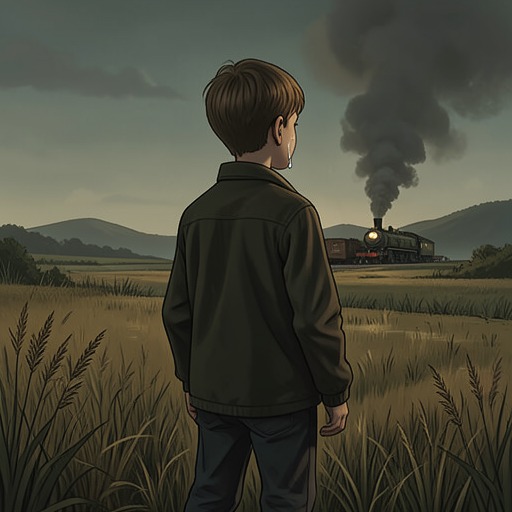
“What we got, all we got, is each other”
The Tiger Rising“What we got, all we got, is each other” is Robert Horton’s recognition that, after Caroline’s death, he and Rob have only one another to rely on. Spoken in the aftermath of the tiger’s death, it gives their grief a name and begins a reconciliation that the family’s silence had kept out of reach.
The Words and Their Circumstances
Robert speaks after Rob insists that he needs his mother. The immediate scene follows a crisis: Rob has demanded that his father say Caroline’s name, and Robert has lowered his gun and drawn his son close. He answers Rob’s need not by pretending Caroline can return, but by admitting that he misses her too and that neither of them has her.
The expression’s companion thought, that they must learn to make do with what remains, is not presented as a cure for grief. It is a practical, shared recognition of their loss: Robert does not ask Rob to bear it alone, and does not claim to be untouched by it himself.
A Change in Their Relationship
The sentence reverses the isolation between father and son. Until this moment, their grief has been difficult to speak about; Robert’s repetition of Caroline’s name makes the loss audible, while his embrace gives Rob an immediate answer to his distress. Rob says that he needs his mother, and Robert responds that he needs her too. The parallel admits their shared dependence on someone who is gone, then redirects them toward the relationship they still have.
Rob buries his face in his father’s shirt and says he needs Caroline. After Robert tells him they have each other, Rob tries to insist that he will not cry, but tears come anyway. The exchange therefore does not demand emotional restraint: the reassurance is followed by Rob’s release of grief and by his seeing his father wipe away his own tears.
Significance
The phrase turns mutual care into the scene’s answer to bereavement. Its force lies in the contrast between what cannot be recovered—Caroline—and what remains possible: father and son acknowledging their loss together. Robert’s words do not erase the absence; they make it possible for both of them to face it without pretending that only one is hurting.
The scene also links Rob’s grief for his mother with the tiger’s death. Rob cries from the place within him where his mother had been, a place he associates also with the tiger, which is now gone. Against that doubled absence, the father’s repeated naming of Caroline and his recognition that he and Rob still have each other establish connection, rather than silence, as the basis for moving forward.